From Polyester Film to Finished Pouch: The GLS Value Chain Explained
March 10, 2026
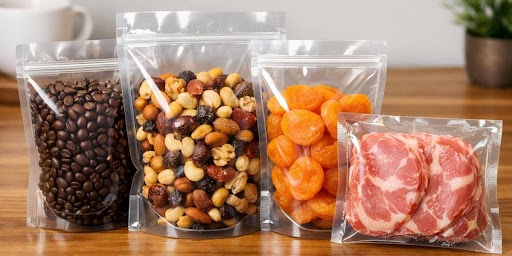
The global packaging industry operates at the intersection of material science, regulatory precision, and performance engineering.
At the forefront of this sphere is GLS Polyfilms, the PET film manufacturing division of GLS Group, forming the structural and technical foundation of high-performance flexible packaging with an installed capacity of 48,000 TPA of BOPET film and up to 90% Post-Consumer Recycled grades.
As food safety standards tighten and sustainability targets become measurable benchmarks, the quality and validation of the base film play a decisive role in determining the reliability of the final pack.
More than 50% of packaged food products depend on advanced multilayer film and foil laminates to maintain freshness, prevent contamination, and extend shelf life.
At the same time, close to 70% of consumers show preference for recyclable or reusable packaging formats, increasing the need for traceable, compliant, and responsibly engineered materials.
These expectations demand films that deliver proven barrier integrity, controlled migration levels, seal consistency, and compatibility with complex lamination systems.
Within the integrated manufacturing ecosystem of the GLS Group, spanning aluminium foil production, speciality chemicals, printing, lamination, and pouching, GLS Polyfilms provides the critical first layer of performance.
Through advanced extrusion technology, real-time process monitoring, migration and barrier testing in NABL-accredited laboratories, and globally recognised certifications such as BRCGS Packaging Materials, ISO 9001, ISO 22000, and ISO 14001, the company operates within a tightly controlled and fully compliant manufacturing framework.
This ensures that every PET film roll meets stringent mechanical, thermal, and food-contact safety requirements across food, pharmaceutical, and industrial applications.
In this blog, we will examine how GLS Polyfilms strengthens packaging performance through advanced manufacturing infrastructure, structured validation protocols, certified compliance systems, and application-specific film engineering, reinforcing its role in supporting safe, high-barrier, and sustainable packaging solutions.
The technical journey from polyester film extrusion to finished pouch conversion follows a controlled, process-driven sequence.
Precision polymer extrusion under monitored temperature, pressure, and tension ensures uniform thickness, molecular orientation, and mechanical stability.
Surface treatment and coating calibration maintain consistent dyne levels critical for ink anchorage and adhesive bonding.
Film compatibility is engineered with polyurethane laminating adhesives, printing inks, and metallisation layers to achieve structural coherence across multilayer laminates.
Seal initiation temperature alignment and converting compatibility assessments support efficiency across high-speed packaging lines.
This structured engineering approach ensures consistent performance and reliability across multilayer packaging applications, reinforcing GLS Polyfilms’ role as a leading polyester film manufacturer in India.
GLS Polyfilms operates a world-class BOPET manufacturing facility equipped with a 10.6-metre Dornier PET film line featuring three extruders capable of producing ABC (three-layered) film structures.
This advanced multilayer configuration enables precise control over film architecture and allows engineered combinations of mechanical strength, seal performance, and barrier optimisation within a single film structure.
The three-layer capability supports customised performance tuning, including improved stiffness, enhanced sealability, surface functionality, and downstream lamination compatibility, making the films suitable for demanding food, pharmaceutical, and industrial packaging applications.
The line includes both-side chemical coating capability, ensuring surface energy uniformity critical for downstream lamination and printing.
Precision slitting is supported by advanced Kampf systems, allowing dimensional consistency required by high-speed converting lines.
With an installed capacity of
We stand among technically equipped PET film manufacturers in India capable of delivering both scale and consistency.
We manufacture a diverse product portfolio engineered for targeted applications
Through its 2.5-metre coating line, the company also produces soft-touch coatings, sealable peelable films (including antifog variants), and colour-coated films.
Each product is developed with application-specific performance in mind. For example
Such engineering depth ensures structured compatibility with laminating adhesives and printing inks, including in-house formulations from GLS Speciality Chemicals, enabling tighter process alignment across multilayer packaging systems.
This integrated approach helps reduce risks such as delamination, seal failure, and barrier degradation during downstream conversion and application.
Health and safety considerations sit at the core of GLS Polyfilms’ operations. Flexible packaging materials intended for food or pharmaceutical contact must undergo stringent validation.
GLS Polyfilms maintains
Critical validation tests include
Such testing ensures films remain stable during sterilisation processes, high-temperature filling, or extended storage conditions.
The company is certified under BRC, ISO 9001:2015, ISO 14001:2015, ISO 45001:2018, and ISO 22000:2018, reinforcing its compliance with global food safety and environmental standards.
For PET film manufacturers in India, documented traceability and migration control are increasingly essential as export markets tighten regulatory scrutiny. We embed compliance at production stage rather than as a post-process validation.
Retort packaging requires films capable of withstanding sterilisation temperatures up to 120°C without compromising barrier integrity or structural stability.
We develop metallised and Alox-coated films engineered for such demanding environments.
Seal retention under pressure, chemical compatibility with polyurethane laminating adhesives, and dimensional stability are validated prior to commercial supply.
By ensuring film-level reliability, GLS strengthens the technical foundation of downstream packaging solutions.
Food-contact films must limit overall and specific migration within permissible regulatory thresholds.
GLS Polyfilms conducts migration analysis to verify compliance under various simulant conditions.
Surface treatments are calibrated to avoid over-treatment, which could impact ink anchorage or chemical stability.
Coatings are designed to meet non-toxicity standards, and PCR-based films undergo strict evaluation to maintain food safety suitability.
Such structured controls are critical for maintaining consumer health confidence while supporting sustainable innovation.
Sustainability Without Performance Compromise
With growing regulatory focus on recyclability, we integrate sustainability into product development
Downgauging requires precise control over mechanical strength and barrier parameters. Without technical validation, thinner films risk puncture failure or seal inconsistency.
GLS addresses this through controlled extrusion parameters and in-house mechanical testing.
These initiatives enhance environmentally responsible packaging solutions while maintaining durability in demanding packaging pouches applications.
While GLS Polyfilms remains the technical foundation, integration within the GLS Group enhances compatibility across all material layers.
In-house aluminium foil production, speciality chemical operations, and printing capabilities enable coordinated development of laminates, inks, adhesives, and coatings.
This end-to-end control reduces inter-supplier variability, ensures consistent quality, and simplifies documentation for printing and packaging companies, providing harmonised compliance records across substrates.
In-house pouching and printing operations allow for tighter process alignment, predictable performance, and reliable delivery of finished packaging solutions.
The result is a streamlined, technically robust pathway from PET film extrusion to printed, high-barrier finished pouches, strengthening performance across complex multilayer packaging formats.
GLS Polyfilms demonstrates that high-performance packaging begins at the film layer. Through advanced extrusion technology, rigorous validation processes, structured migration testing, and application-specific engineering, we build measurable value into modern flexible packaging.
Our technical discipline supports regulatory compliance, safeguards consumer health, and ensures durability across high-barrier and retort packaging pouches. By aligning sustainability goals with mechanical integrity, we strengthen the next generation of reliable packaging solutions.
In an industry where compliance, traceability, and barrier precision define success, GLS Polyfilms continues to elevate technical standards among PET film manufacturers in India, delivering end-to-end, high-performance, and fully compliant packaging solutions to global markets.
1. What are polyester films used for in packaging?
Polyester films, including PET (Polyethylene Terephthalate) and BOPET (Biaxially Oriented PET), are widely used in flexible packaging. They provide strength, clarity, and resistance to moisture, oxygen, and light, making them ideal for food, pharmaceutical, and industrial applications.
2. How is the quality of polyester films ensured for food contact?
Food-contact polyester films undergo rigorous testing for oxygen transmission rate (OTR), water vapour transmission rate (WVTR), migration levels, and seal integrity. These tests ensure films comply with international safety standards and maintain product quality during storage and transportation.
3. What role does aluminium foil play in multilayer packaging?
Aluminium foil acts as a high-barrier layer in multilayer laminates. It helps prevent oxygen, moisture, and light from entering the package, extending shelf life and maintaining the freshness of food, beverages, and pharmaceuticals.
4. Why is migration testing important for packaging films?
Migration testing measures the transfer of chemicals from films to food or pharmaceutical products. Controlled migration ensures regulatory compliance, prevents contamination, and safeguards consumer health.
5. How are high-temperature and retort packaging films validated?
Films used in retort or high-temperature applications are tested for thermal resistance, seal retention, and barrier integrity under sterilisation conditions up to 120°C. These validations ensure that the packaging performs reliably without compromising product safety.
 312C & 314, 3rd Floor, JMD Pacific Square, Sector-15, Part-2, Gurugram – 122001
  +91 124-4117100 / 01 / 02
  contact@glsind.com
© 2025 GLS Group. All Right Reserved.
Powered by ITPL
