Aseptic Packaging at GLS Elopak: How Engineered Precision Extends Shelf Life
January 22, 2026
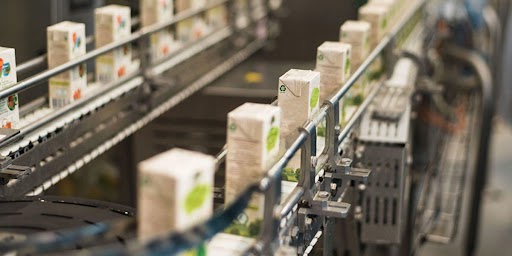
Shelf life is engineered through material science, sterile processing, and rigorous quality control, ensuring reliability and consistency.
In aseptic packaging, both the product and the carton are sterilised separately and sealed in a controlled environment. This closed system allows liquid foods to remain shelf-stable for six to twelve months under ambient conditions, without preservatives or refrigeration.
This principle defines how GLS Elopak operates. A joint venture between India’s GLS Group and Norway-based Elopak, the company brings globally proven aseptic carton technology to industrial-scale manufacturing, protecting liquid foods so that taste, nutritional value, and product safety remain intact from filling to final consumption.
To support growing brands, GLS Elopak manufactures over 5 billion packs annually, with capacity scalable to 10 billion, enabling consistent, high-volume supply for dairy, juices, functional beverages, and liquid nutritional products.
GLS Elopak’s flagship Pure-Pak® and Alpak® cartons are engineered with a six-layer high-barrier structure for superior product protection.
Food-grade polyethylene layers ensure hygiene and secure sealing, an aluminium foil layer blocks oxygen and light, and a renewable paperboard core provides strength and dimensional stability.
Together, these layers create a protective internal environment that preserves product quality throughout storage, transportation, and distribution.
Backed by internationally recognised certifications including ISO 9001, ISO 22000, BRC, and ISO 14001, GLS Elopak delivers aseptic packaging aligned with global food safety, quality, and sustainability standards, reinforcing long-term brand reliability and consumer trust.
Below are eight clearly defined, technology-led aspects that support shelf stability in GLS Elopak’s aseptic packaging and outline how it differs from conventional packaging approaches.
Aseptic packaging from GLS Elopak is built around a six-layer carton structure designed to support the safe storage of liquid food under ambient conditions.
Each layer has a defined function, working together to help maintain product quality from filling through distribution and storage.
This multi-layer construction supports protection against external factors such as light, oxygen, and moisture, helping preserve taste, safety, and nutritional integrity throughout the intended shelf life.
The innermost layer comes into direct contact with the product. It provides a secure seal and helps maintain hygiene by forming a protective barrier between the liquid and the rest of the packaging structure.
This layer acts as a bonding interface, connecting the inner PE layer to the aluminium foil. It helps stabilise the carton structure and supports consistent performance across layers.
The aluminium foil serves as a key barrier layer, helping protect the contents from light, oxygen, and moisture, factors that can influence product quality and shelf stability over time.
Positioned between the aluminium foil and the paperboard, this layer connects the barrier layer to the structural core of the carton, contributing to overall durability.
Made from wood pulp, the paperboard provides strength, rigidity, and shape to the carton. This layer supports handling, transportation, and stacking during distribution.
The outermost layer offers protection against external moisture and environmental exposure, supporting surface durability throughout the supply chain.
Together, these six layers form a well-balanced packaging structure that combines protection, strength, and functionality, supporting a range of long-life liquid food and beverage applications.
Shelf life depends as much on process control as on material design. GLS Elopak operates one of the region’s earliest advanced aseptic manufacturing units, maintaining fully sterile conditions throughout production and packaging.
This controlled environment prevents microbial contamination without the need for preservatives.
The result is aseptic packaging that supports clean-label objectives while delivering extended shelf stability.
For brands seeking a packaging company that understands asepsis as a system, not a single step, we offer proven, certified reliability.
GLS Elopak’s manufacturing campus spans over 17 acres, with a current capacity of 5+ billion packs annually, scalable to 10 billion packs through ongoing expansion.
This scale allows
Many packaging companies struggle to maintain uniform standards at scale. Our infrastructure is designed to ensure that aseptic packaging quality remains consistent, regardless of volume.
Our aseptic packaging solutions, including Pure-Pak® and Alpak®, are available in sizes ranging from 65 ml to 1000 ml, allowing brands to address different consumption occasions while working within a single packaging ecosystem.
Applications include
Each format can be paired with multiple closure options, tamper-evident systems, and environmentally friendly paper straws.
This flexibility allows brands to scale, diversify, and innovate while staying within a single, trusted packaging company ecosystem.
GLS Elopak’s approach to sustainability is structural, not cosmetic. Our aseptic packaging solutions are made to replace plastic bottles with renewable, low-carbon carton formats without sacrificing shelf life.
Key sustainability measures include
As a responsible packaging company, GLS Elopak ensures that extended shelf life aligns with environmental accountability.
GLS Elopak’s aseptic packaging operations are governed by internationally recognised certifications, including
These standards ensure that every packaging solution meets global compliance expectations, making GLS Elopak one of the most trusted packaging companies for long-life liquid food products.
GLS Elopak operates beyond the role of a packaging supplier. Its scope covers the complete aseptic packaging lifecycle.
Brands receive support across filling equipment alignment, closure system performance, technical servicing, spare parts availability, and collaborative research for new product development.
This integrated model simplifies operations. It limits supplier dependency and positions the organisation as a long-term packaging company partner rather than a transactional provider.
Extended shelf life delivers a clear commercial advantage. Aseptic packaging enables
These benefits are the result of disciplined engineering, controlled production environments, and global packaging expertise, not assumptions.
GLS Elopak exists to ensure that liquid food consumption remains safe, accessible, and appealing.
Our aseptic packaging solutions are built on technology, backed by certifications, and delivered through sustainable manufacturing.
As a packaging company with global lineage and advanced local capability, we support brands that value shelf life, safety, and long-term performance.
For brands seeking aseptic packaging that delivers dependable shelf life, operational confidence, and sustainability leadership, a capable partner makes the difference.
Contact GLS Elopak to discuss aseptic packaging solutions aligned with your product requirements, market needs, and long-term growth objectives.
1. What makes aseptic packaging suitable for long unrefrigerated shelf life?
Aseptic packaging relies on sterile processing and high-barrier material structures that protect liquid food from oxygen, light, and microbial contamination. This controlled environment allows products to remain shelf-stable without the need for preservatives or cold storage.
2. Which products are best suited for aseptic carton packaging?
Aseptic cartons are ideal for liquid foods such as milk, flavoured dairy, juices, functional beverages, and other liquid nutritional products that require safety, quality retention, and extended shelf life under ambient conditions.
3. How does aseptic packaging support clean-label product requirements?
By maintaining sterility throughout filling and sealing, aseptic packaging eliminates the need for chemical preservatives. This allows brands to meet clean-label expectations while maintaining product safety and stability.
4. How does aseptic packaging contribute to sustainability goals?
Aseptic cartons are largely made from renewable materials and are designed for efficient recycling. Their ability to extend shelf life without refrigeration also reduces energy consumption across storage and distribution.
5. What should brands consider when selecting an aseptic packaging partner?
Brands should evaluate technical capability, material quality, process control, certifications, and the ability to provide end-to-end support. A partner with integrated solutions helps ensure consistent performance, regulatory compliance, and long-term scalability.
 312C & 314, 3rd Floor, JMD Pacific Square, Sector-15, Part-2, Gurugram – 122001
  +91 124-4117100 / 01 / 02
  contact@glsind.com
© 2025 GLS Group. All Right Reserved.
Powered by ITPL
